
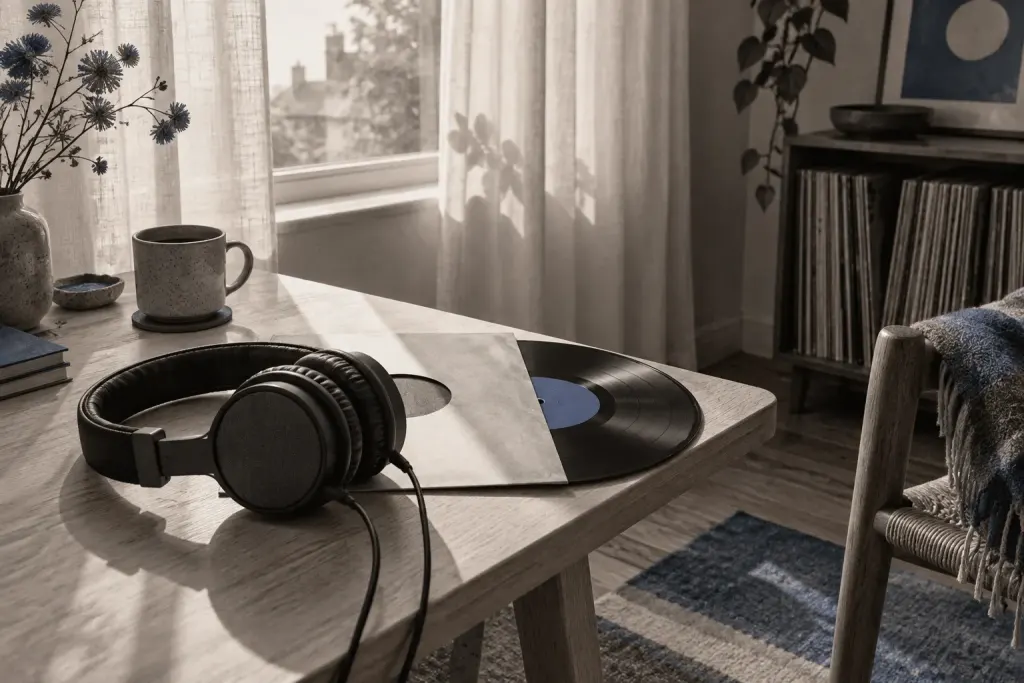
Sometimes the strongest memory of listening is the moment your attention wandered. Recording that honestly can make a listening diary more useful than pretending every session was concentrated.
Note the setting first: headphones or speakers, the activity around you, and whether you intended close listening. Avoid recording private details about other people who happened to be present.
Identify one point where attention shifted. You might have followed a passing conversation, started reading or become absorbed in a thought prompted by the music. Distinguish those situations instead of labelling all of them “lost focus.”
Return to a short section later under different conditions if you want to explore it. What becomes audible when you are no longer doing another task? Do not assume the second encounter is automatically the only valid one; background listening and concentrated listening serve different purposes.
An entry can finish with a practical preference: this piece suited an uninterrupted evening, or it offered a pleasant texture while tidying. That preference describes your experience on that occasion.
The diary is not an attendance register for perfect listening. Its value is showing how music meets an ordinary day, including the moments when the day pulls your attention elsewhere.
Editorial illustration from the site’s image collection.