
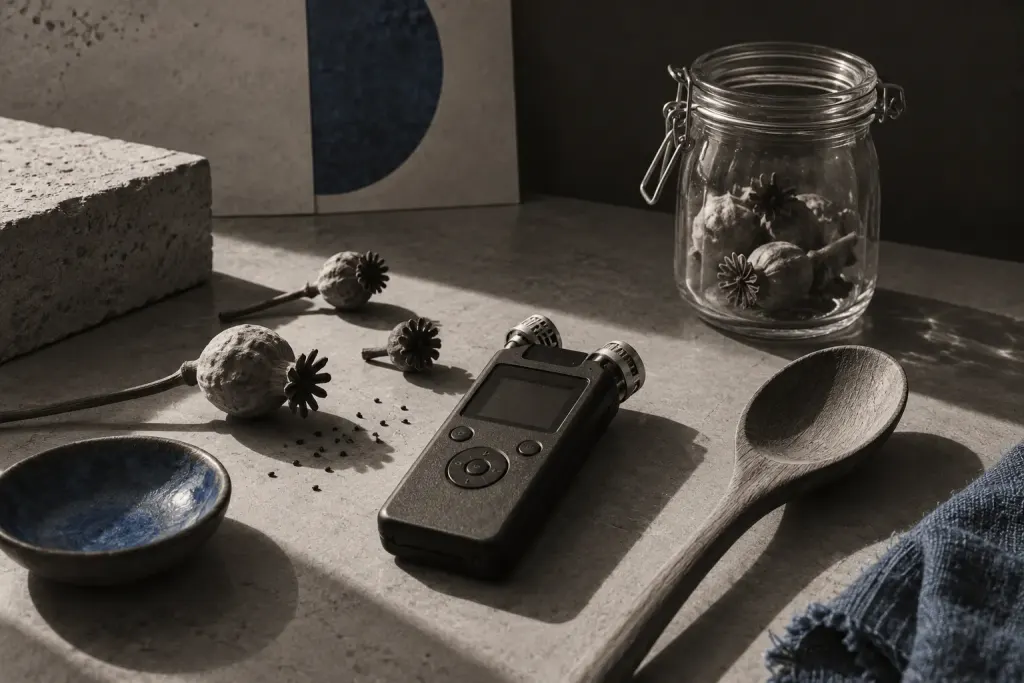
Two identical taps can feel different when they arrive from different places. A small spatial composition explores that change without requiring louder sounds, complicated instruments or a theory lesson.
Use a quiet room and three safe positions within easy reach: left, centre and right. One person can make soft fingertip taps on a table, or two people can take turns with similar small sounds. Keep the volume comfortable and leave pathways clear.
Give the positions a readable score
Write six letters: L, C, R, R, C, L. Play one sound for each letter with a steady, unhurried gap. Repeat the pattern, then ask a listener to describe the route they heard before showing the score.
The task is not a hearing test. Room reflections, seating position and differences between the sound sources can all affect the experience. If the route is unclear, describe that result rather than grading the listener.
- Keep the sound and timing as similar as you can.
- Change only the order of the positions.
- Try L, R, L, R, C, C and compare its sense of arrival with the first pattern.
- Let the listener propose a third route and perform it together.
Make a musical decision
Choose where the piece should feel settled. Two central sounds may suggest an arrival, but you might prefer an ending that stays off to one side. Extend the sequence only if the new sounds change that relationship.
A recording made with one microphone may not preserve what a person in the room heard. Label any recording as a document of that microphone’s position, and keep the written score as the clearer description of your intention. The piece can remain six sounds long if those six sounds already give the listener somewhere to travel.