
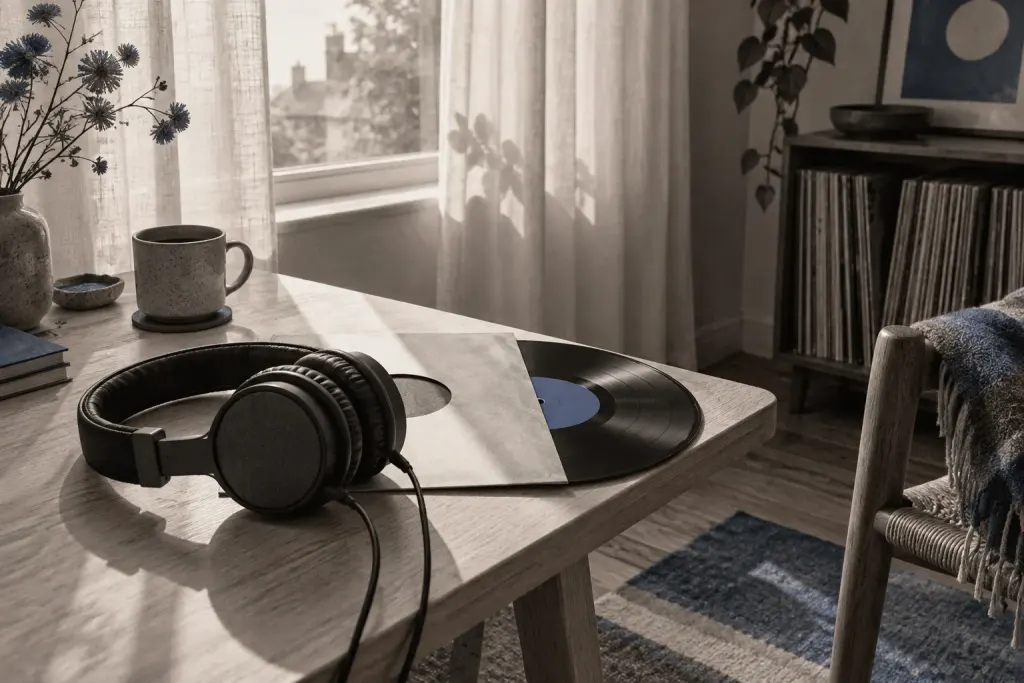
A repeated phrase can restart so smoothly that its boundary almost disappears. Finding that return is a listening exercise in recognising a beginning inside a continuous flow.
Pick a short passage
Choose a familiar recording and listen for a small sequence you think repeats. Identify a possible first sound, then wait for it to return. Keep the playback at a comfortable level; greater volume will not necessarily make the boundary clearer.
Use a simple mark in your notebook each time you hear the restart. If the marks become uncertain, the phrase may be changing, overlapping with another part or simply longer than you first assumed.
Test a different beginning
On another listen, choose a different sound within the same pattern as your starting point. Does the sequence still seem to divide naturally there? Explain which accent, pause or change makes one boundary more convincing to you.
This is a way to describe your hearing, not a requirement to identify an official bar line. A useful note preserves both the proposed beginning and the clue that led you to it. Repetition then becomes something you can examine rather than a general impression that the music goes round.