
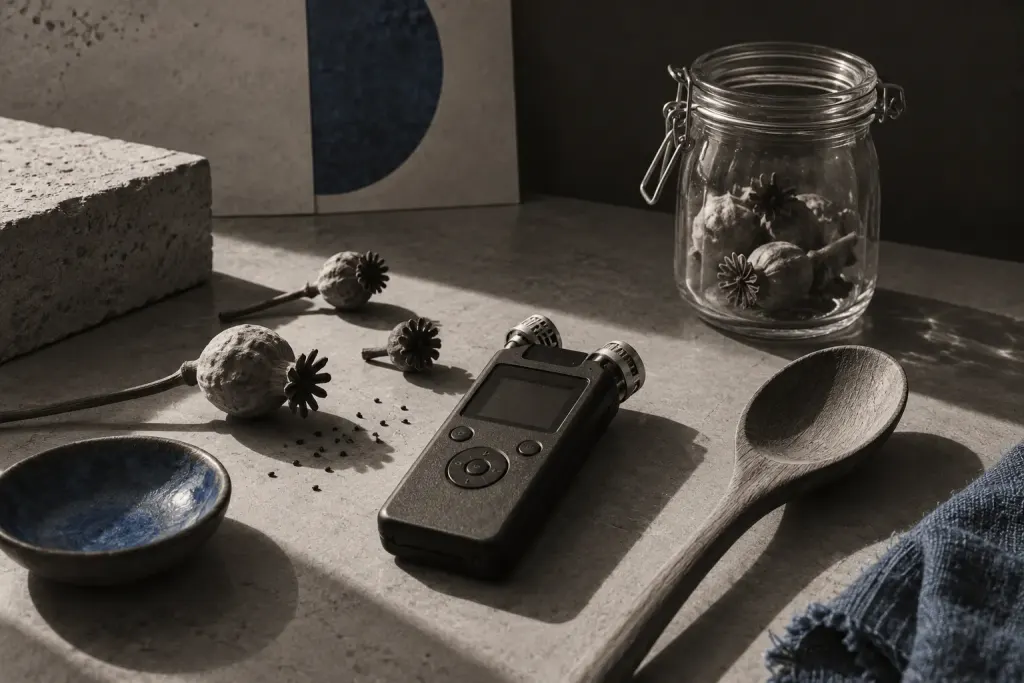
A small change of listening position can become a useful sound experiment without buying equipment or trying to measure a room professionally.
Choose an ordinary, quiet source that can remain in one place, such as a small speaker playing a short passage at a comfortable level. Keep the volume fixed. Select two safe listening positions that do not block a route or disturb other people.
Listen from the first position, then the second. Describe what you notice using specific comparisons: the voice seems clearer, a low sound is more noticeable, or another room noise covers part of the passage. If you do not hear a difference, write that down rather than inventing one.
Keep the observation modest
You have changed position, but you have not isolated every cause. Your orientation, background activity and memory of the first listen can also affect the comparison. Avoid converting the exercise into a precise claim about the room’s acoustics.
Repeat the same short passage once, returning to the original position. Note whether the first impression persists. Do not increase the volume to force a difference to appear.
For a creative extension, imagine composing a piece for listeners who occupy different parts of the room. Which details would you want everyone to share, and which could vary with position?
This makes listening location part of the musical question. The exercise is complete when you can describe an observation and its limits, even if the most useful result is discovering how much your attention changes when you move.
Visual note: the image illustrates the subject, not a documented event.