
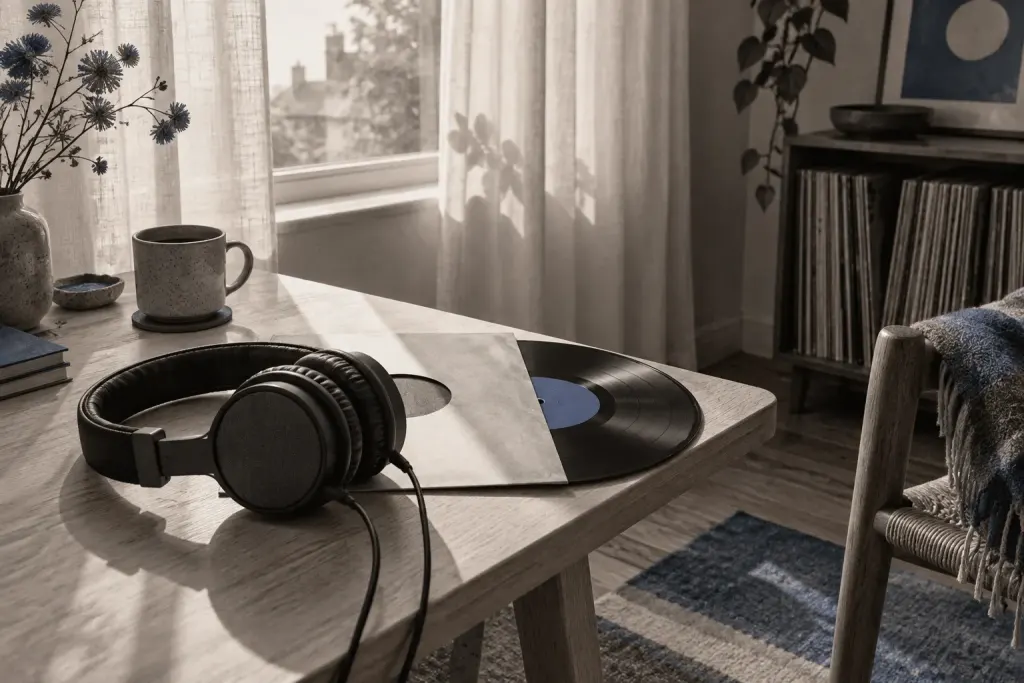
Some sounds seem to arrive with a clear edge; others seem to emerge gradually. You can listen to that beginning without identifying the note or the instrument.
Choose a short recording you already have permission to play. Listen at a comfortable volume and focus on the moment a sound begins. Draw a line that expresses your impression: a sharp corner, a slope, or an uncertain dotted edge.
The drawing is a personal listening aid, not an acoustic measurement. A recording, room and playback system all contribute to what you hear, so avoid turning the sketch into a universal claim about an instrument.
Compare unlike beginnings
Find another sound in the same recording. Does it seem to start more abruptly or gradually? Replay the two moments without increasing the volume to force a difference. If the distinction remains unclear, record that uncertainty.
Add a few words beside each sketch describing what led you to choose its shape. This makes the drawing understandable later, when the sound is no longer fresh in memory.
You may end up with two similar sketches. That is still a useful result: the exercise trains attention to one part of a sound, rather than requiring every example to fit a different visual category.