
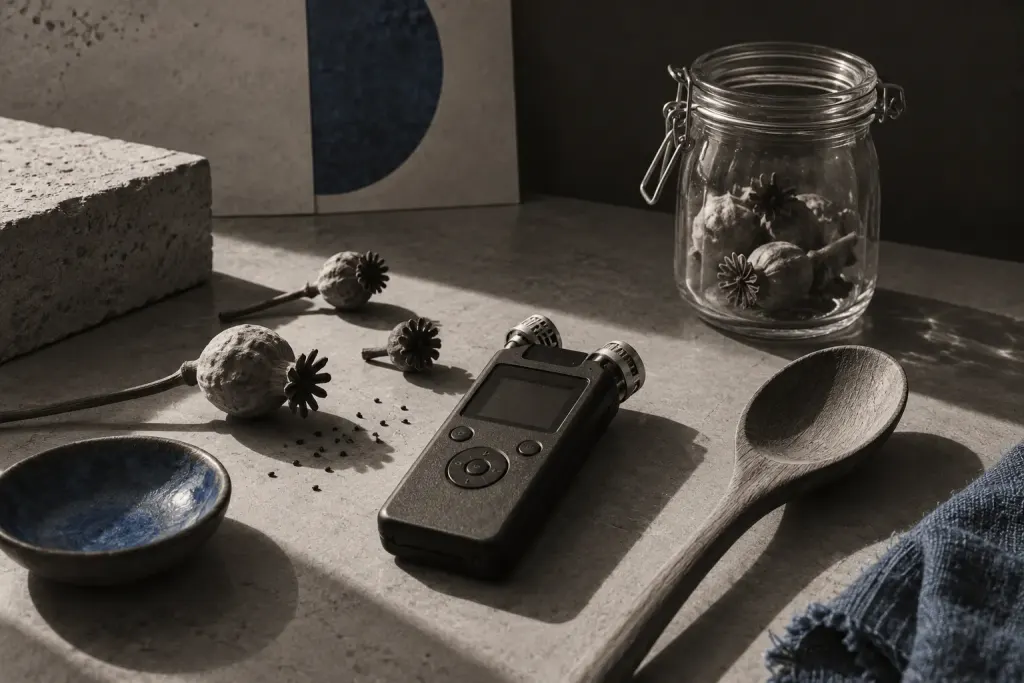
Repetition becomes easier to hear when the change is small. For this exercise, use a quiet tap made with your hands on a suitable surface. Keep the volume comfortable and avoid striking fragile objects.
Build a pattern you can remember
Make four evenly spaced sounds, then pause. Repeat that group several times. You can speak “one, two, three, four” while learning the spacing, but the numbers are only a practice aid.
Now replace the fourth tap with a softer touch or a clap at a comfortable level. Keep the first three sounds and the spacing as similar as you can.
Describe what the change does
Does the new sound make the group feel finished, interrupted or ready to repeat? These are listening impressions, not rules that everyone must hear identically.
Try returning to the original pattern after two changed groups. Notice whether the familiar ending now stands out.
Record the experiment simply
Draw four marks, using a different shape for the changed sound. Add one sentence about what you noticed. There is no need to claim a formal composition or a measured experiment.
If timing itself interests you, try moving emphasis within a rhythm separately. Changing one feature at a time makes it easier to tell which choice produced the difference you heard.