
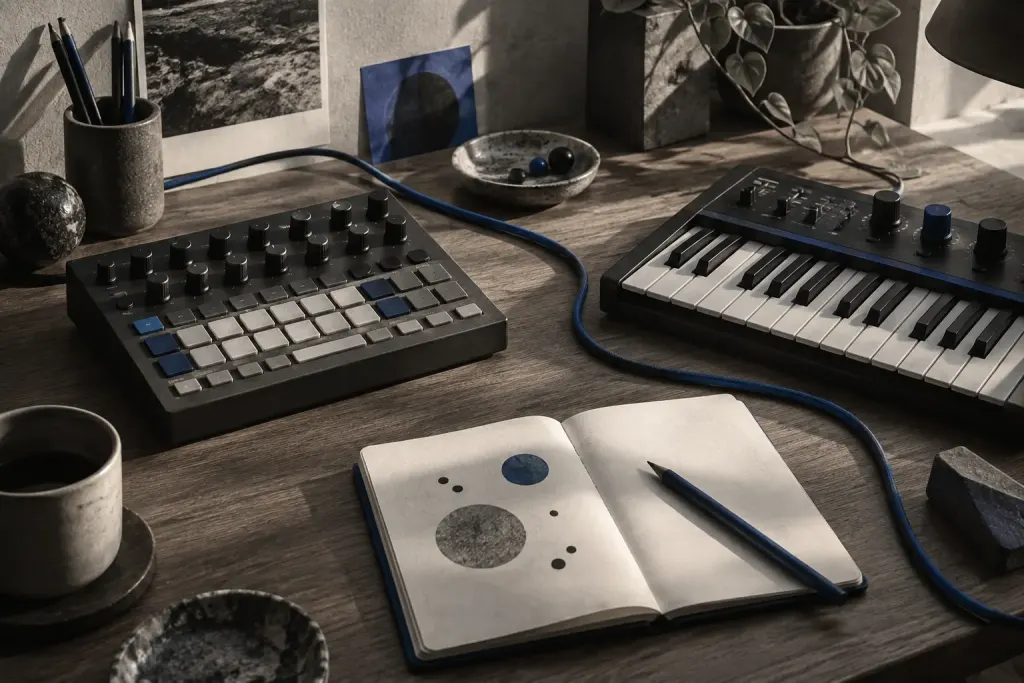
A melody can feel familiar before you could sing its notes accurately. Try following its direction instead. A pencil line offers a deliberately rough record of what you hear, without turning the session into a test of musical vocabulary.
Choose one short phrase
Play a passage that you can comfortably repeat. Move the pencil upward when the line seems to rise, downward when it falls and sideways when it seems to stay around the same height. Leave space for a second attempt underneath.
This drawing is a personal listening aid, not notation. It does not establish exact intervals, rhythm or key. If you lose the line when other instruments enter, mark the uncertainty rather than inventing a smooth curve.
Compare two returns
Find a later appearance of the phrase. Draw it again without looking closely at your first sketch. Does the ending change? Does a longer held sound alter the outline? Return to the recording to check the difference you think you noticed.
You may discover that the melody stays similar while the accompaniment changes your impression of it. Keep those observations separate.
Give the sketch one useful sentence
Write something specific: “The phrase climbs twice, then settles lower.” Compare that with your experience of following the bass. Two simple lines can reveal different kinds of movement inside the same song, even when neither drawing captures every note.