
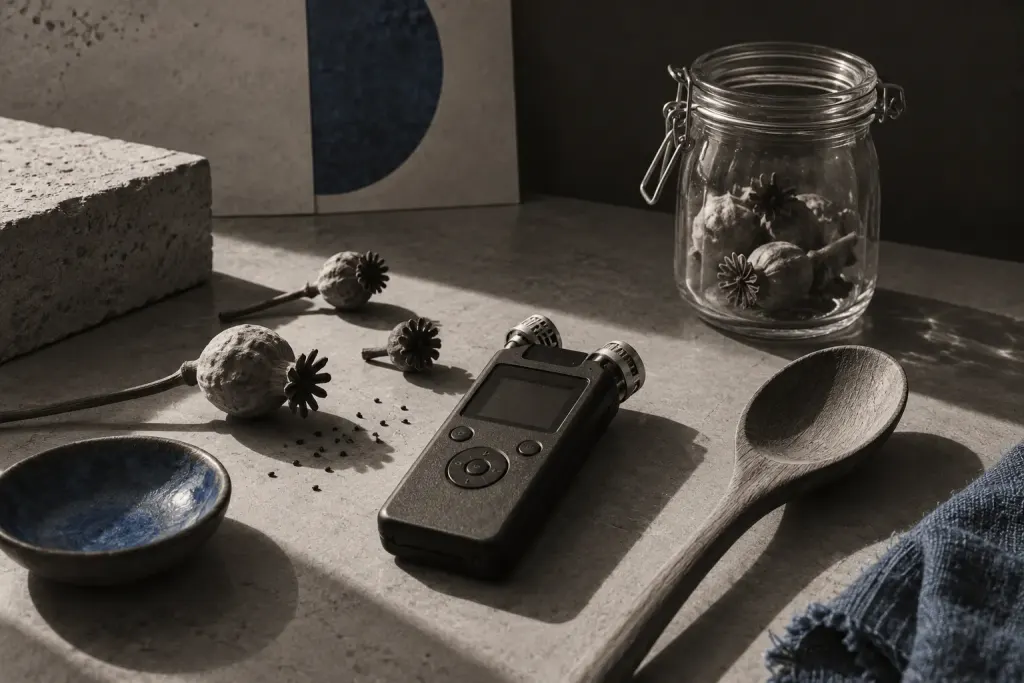
A sheet of paper, a wooden spoon and a closed notebook are enough to start a small sound composition. The interesting decision is not how many noises you can make. It is which ones you choose to repeat, contrast and leave out.
Use objects that are safe to handle and work quietly enough to avoid disturbing people nearby. This original exercise can be performed live; recording it is optional.
Give each object one job
Choose a soft continuous sound, a short tap and a sound that can mark a change. You might rub paper gently, tap the closed notebook with your fingertips and set the spoon down softly. Avoid breakable objects and any action that could damage a surface.
Try each sound on its own. Notice how it begins and ends. The quiet tail after an action may be more interesting than its loudest instant.
Build a simple beginning, middle and ending
For the beginning, repeat one sound with generous gaps. In the middle, introduce a second sound that answers it. Near the end, let the third sound interrupt the pattern once, then decide whether to return to the opening or stop.
You can sketch the sequence with marks on paper: a dot for a tap, a line for a longer sound and blank space for waiting. Keep the notation easy enough to follow while performing.
Change one decision on the second attempt
Make the gaps longer, reverse the order of two sounds, or remove a repetition. Changing everything at once makes it harder to hear which decision affected the piece.
If you record, listen to the result before adding effects. A clearer performance or a different distance from the recorder may be more useful than processing.
Give the piece a working title based on its movement or mood, then write down one choice you would keep. For a starting collection of sounds, see our everyday-object listening guide. A minute is a container for the experiment, not a target you need to fill with constant activity.